Want to improve your experience? Turn on music now.



13 Dec, 2025
Everybody Wants 100 Stores. Almost Nobody Wants The Systems Required To Build Them.
Let’s be honest.
Most people don’t want a business. They want the lifestyle they think comes with a business.
The freedom, The money, The multiple outlets. The passive income.
What they don’t want is inventory management, staff turnover, operational headaches, franchise disputes, food wastage, customer complaints and the thousand boring decisions that happen every single day.
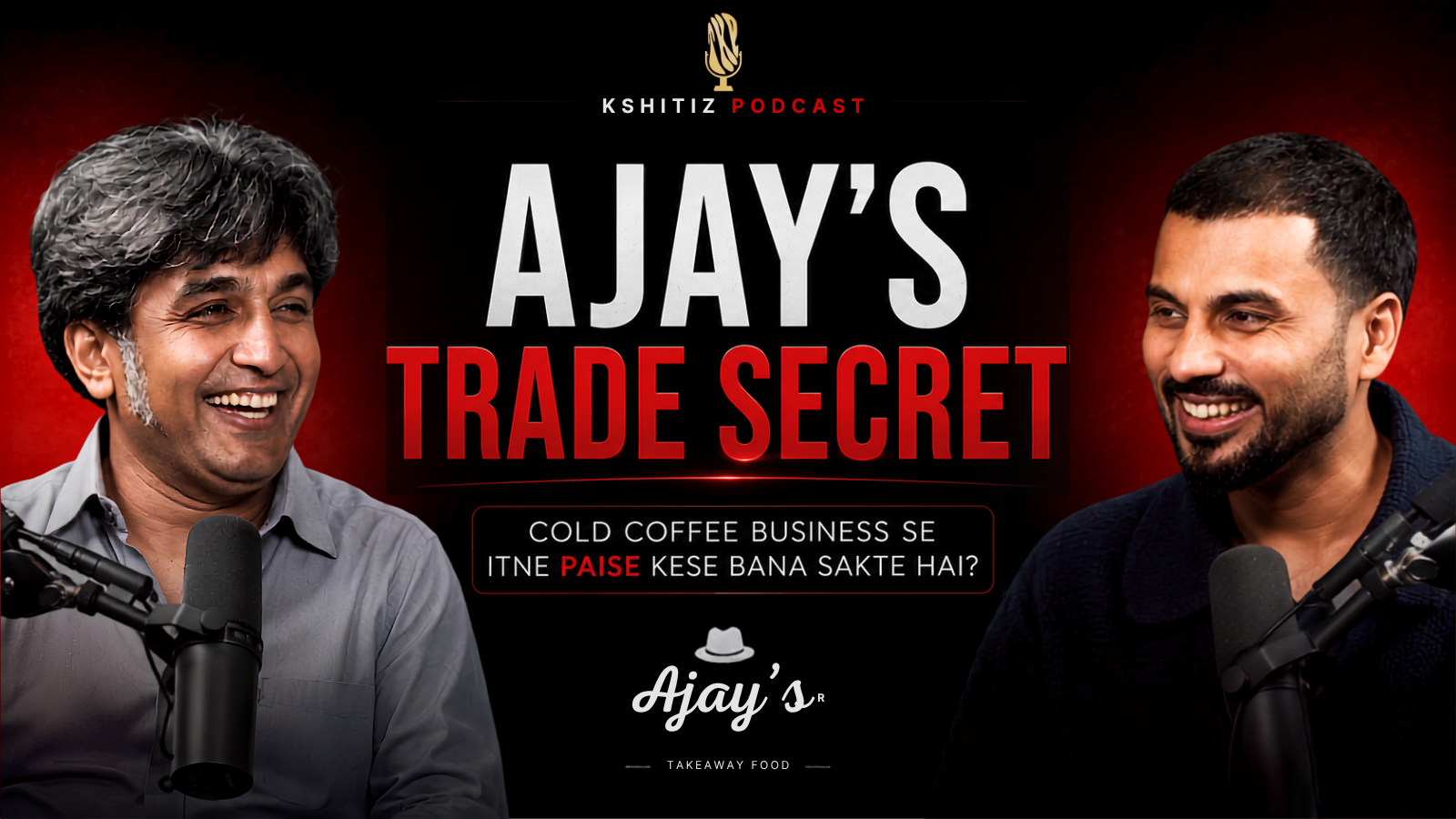
That’s why this conversation with Ajay Solanki was fascinating.
Today, Ajay’s operates more than 248 outlets and is targeting 3,000 stores by 2030. But what stood out wasn’t the number. It was the mindset.
Because scaling a business isn’t about opening more locations.
It’s about making sure the hundredth outlet performs like the first.
And that is where most businesses break.
A ₹30 Burger Is Easy. Making Money From It Is The Real Business.
Every entrepreneur loves talking about products. Customers love talking about products. Investors love talking about products.
The funny thing is that products are rarely the reason businesses succeed.
When people hear that Ajay’s sells burgers at incredibly affordable prices, they immediately ask how that’s possible.
Wrong question.
The real question is how do you create a system that can sell thousands of those burgers every single day while remaining profitable.
Customers see a burger.
Founders need to see procurement, supply chains, staffing, wastage, consistency, rentals and margins.
Business is not what happens at the counter. Business is what happens behind it. And the businesses that understand this always outlast the businesses that don’t.
Most Restaurant Owners Don’t Have A Food Problem. They Have A Founder Problem.
This might sound harsh.But it’s true.
Most restaurants don’t fail because competitors have better food. They fail because the owner becomes the bottleneck.
At first, the founder manages everything because they have to. Then they continue managing everything because they want to. Then growth stops because nobody can make a decision without them. The owner approves every purchase.
Solves every problem. Handles every complaint. Makes every decision. Eventually the business becomes dependent on one person. And dependency is the enemy of scale.
The goal isn’t to build a business that needs you every minute. The goal is to build one that works when you’re not there.
The Franchise Industry Doesn’t Need More Buyers. It Needs More Skeptics.
One thing I appreciated about Ajay was his honesty around franchising. Because the franchise world is filled with promises.
Guaranteed returns. Fast growth. Easy operations. Passive income.
The brochure always looks amazing. Reality usually asks tougher questions.
How many franchisees are actually profitable?
What’s the payback period?
What support exists after the agreement is signed?
What happens if a location underperforms?
People get excited by revenue projections. Smart entrepreneurs get interested in risk. And that difference alone saves people lakhs.
Freedom Is Not Something You Buy. It’s Something You Build.
One of the most interesting concepts discussed during the episode was what Ajay calls Freedom Mode.
Most entrepreneurs say they started a business for freedom.
Yet many end up creating a life where they can’t switch off their phone for three hours.
That’s not freedom.
That’s self-employment with extra stress.
Real freedom comes from systems. Training, Processes. Delegation and Documentation.
The boring things nobody posts about on Instagram.
Freedom is not the reward for starting a business.
Freedom is the reward for building a business properly.
Marketing Is Not Expensive. Being Invisible Is.
This is something I strongly agree with.
Many businesses treat marketing like a cost.
Then they wonder why customers forget they exist.
Marketing isn’t an expense, but bad marketing is an expense. Good marketing is an investment.
The brands that survive aren’t always the best products. They’re often the products people remember.
Visibility creates familiarity, Familiarity creates trust, Trust creates customers.
And customers create growth.
The equation is surprisingly simple.
Valuation Makes Headlines. Legacy Makes History.
Towards the end of the conversation, we spoke about something most founders ignore.
Legacy.
Today’s startup culture celebrates funding rounds, valuations and growth numbers.
Nothing wrong with that.
But a valuation tells you what somebody thinks your company is worth today.
A legacy tells you what your company meant years later.
One is measured in numbers.
The other is measured in impact.
Ajay’s journey reflects that distinction.
The ambition isn’t just to build more outlets.
It’s to build something that lasts.
Why This Episode Matters
If you’re planning to start a food business, this episode will save you from expensive assumptions.
If you’re considering a franchise investment, this episode will help you ask better questions.
And if you’re an entrepreneur chasing growth, this episode is a reminder that scale isn’t built through ambition alone.
It’s built through systems.
Everybody wants the results.
Very few people respect the process.
The businesses that win are usually the ones that do both.
